On 11 June 2026, the Interreg Euro-MED projects LOGREENER, INFIRE and EnerCmed joined forces during European Sustainable Energy Week to organise a policy session on one of the key questions facing local authorities today: how can cities and municipalities finance the energy transition when grants alone are no longer enough?
The session in depth
The session, “Rebuilding Mediterranean cities together: community engagement and innovative finance for climate neutrality”, brought together European institutions, national finance authorities, energy agencies, and local governments to discuss practical ways to accelerate local energy investments in the Mediterranean and beyond. The debate focused on the growing gap between ambitious climate and energy targets and the limited fiscal, technical and financial capacity of municipalities, especially small and medium-sized ones. An important purpose of the session was also to present and promote the joint policy recommendation developed by LOGREENER, INFIRE and EnerCmed. The recommendation calls for the main policy and technical tools of the three projects to be made more visible and accessible to local authorities, notably through the Covenant of Mayors support framework. It highlights the LOGREENER toolkit and green fiscal policy models; INFIRE’s innovative financing and project evaluation tools, and EnerCmed’s approach to renewable energy communities, nature-based solutions and urban regeneration in areas at risk of social exclusion. 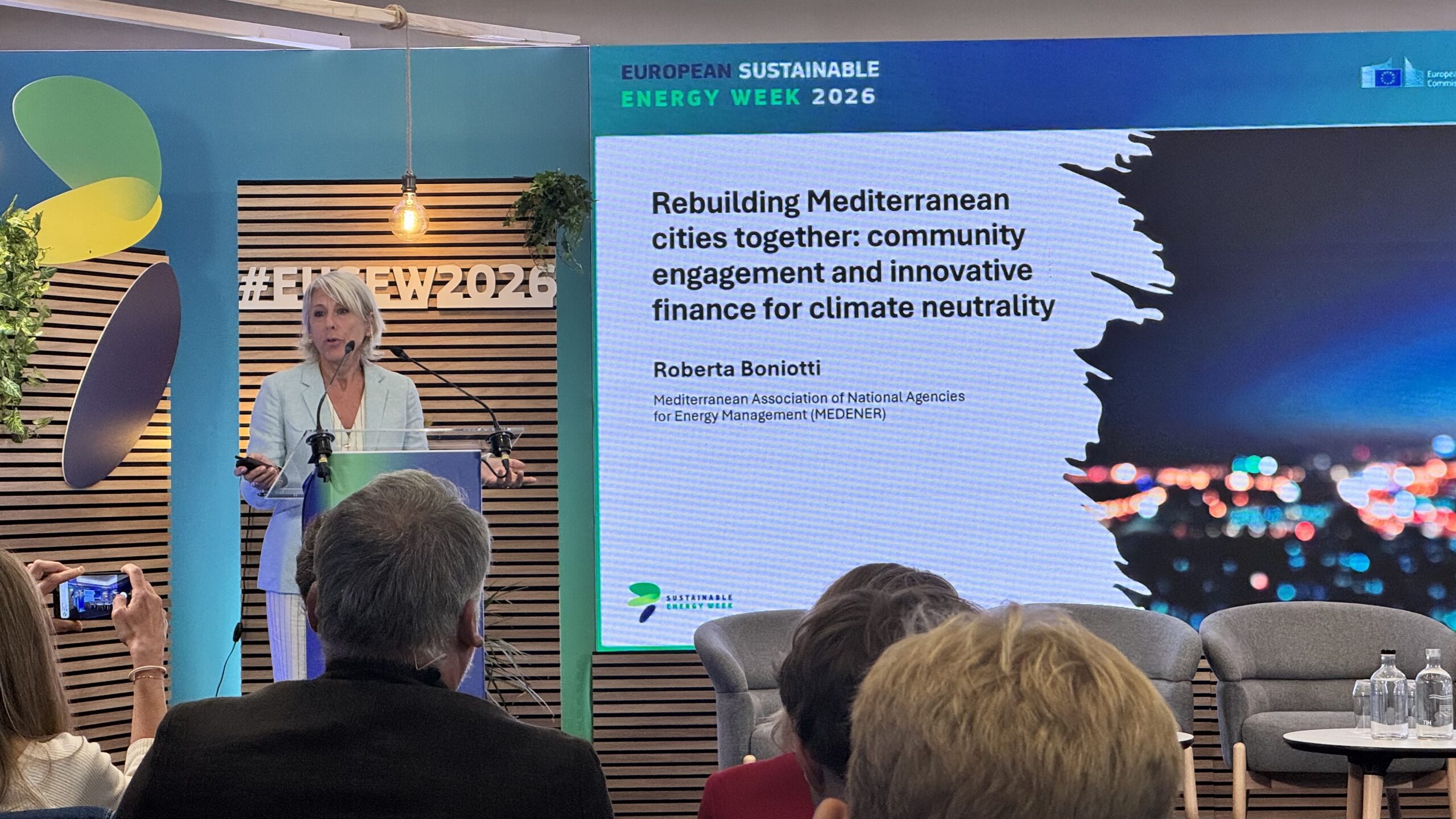 The event opened with a keynote presentation by Roberta Boniotti, Secretary General of MEDENER, who underlined that the Mediterranean is Europe’s climate and energy hotspot. The region faces accelerating warming, rising cooling demand, water stress, wildfire risks and coastal vulnerability. In this context, mitigation, adaptation, social resilience and innovative finance must be planned together, not as separate policy agendas. The panel featured Adrien Bullier (CINEA), Ana Zorić (Croatian Ministry of Finance), Roberta Boniotti (MEDENER), Corentin Girard (Valencia Sostenible, Municipality of Valencia) and Georgios Marinakis (Regional Union of Municipalities of Crete / Mayor of Rethymno). The discussion was structured around three thematic blocks.
Block 1 – Why local energy investment delivery is still failing
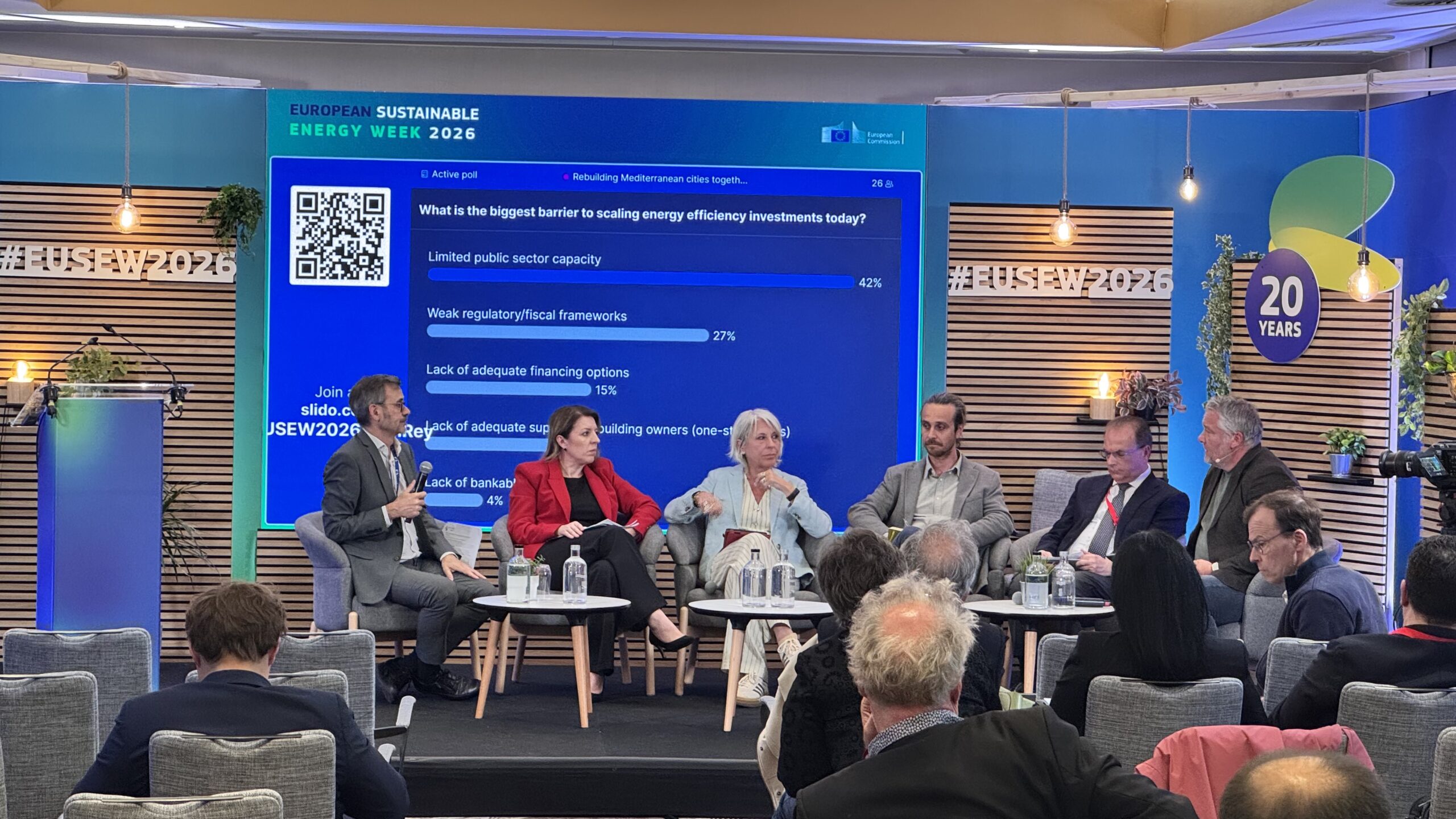 The first block did not point to a single bottleneck. The discussion showed that local delivery fails when financing, project preparation, and institutional capacity are lacking. The answer emerging from the block was that a lack of money is not the only problem: municipalities often lack the technical support, standardised tools, and advisory structures needed to transform SECAPs and climate strategies into bankable investment pipelines. For larger cities such as Valencia, the most useful support is the one that helps move from strategy to implementation. For smaller municipalities, represented by Crete and Rethymno, existing financial instruments remain difficult to use without grants, regional coordination, and strong energy agency support.
Block 2 – Financing beyond grants in the post-RRF era
The second block showed that the post-RRF financing architecture must combine public funding, fiscal policies, and de-risking instruments rather than simply replacing grants overnight. Fiscal tools such as taxes, fees and incentives can support behavioural change and generate local resources, but their political feasibility depends on fairness and a clear link to public benefits. The discussion also underlined the need for EU financing instruments and technical assistance facilities to better integrate mitigation and adaptation, as Mediterranean municipalities face both pressures simultaneously. Non-grant financing can work only if public money is used strategically to prepare projects, reduce risk and overcome the persistent grant-dependent culture.
Block 3 – Citizens, communities and wider socio-economic benefits
The final block stressed that citizens cannot be treated only as passive beneficiaries of the energy transition. Energy communities can contribute to affordability, trust and local ownership, but they need sufficient scale, clear rules and support from local energy agencies and one-stop shops to reach vulnerable households. The Crete perspective showed that citizen participation depends on visible local value, not only on policy narratives. Croatia’s experience with retail sovereign bonds showed that citizens can become investors when the product is simple, trusted and institutionally credible. The next policy question is whether similar citizen-oriented green instruments can support future climate and energy investments.
Audience interaction was supported through live Slido polls on the biggest barriers to scaling energy-efficiency investments, the tools most likely to unlock investment in the next five years, and the potential role of citizen investment models such as energy communities, cooperatives, and green or sustainable retail bonds.
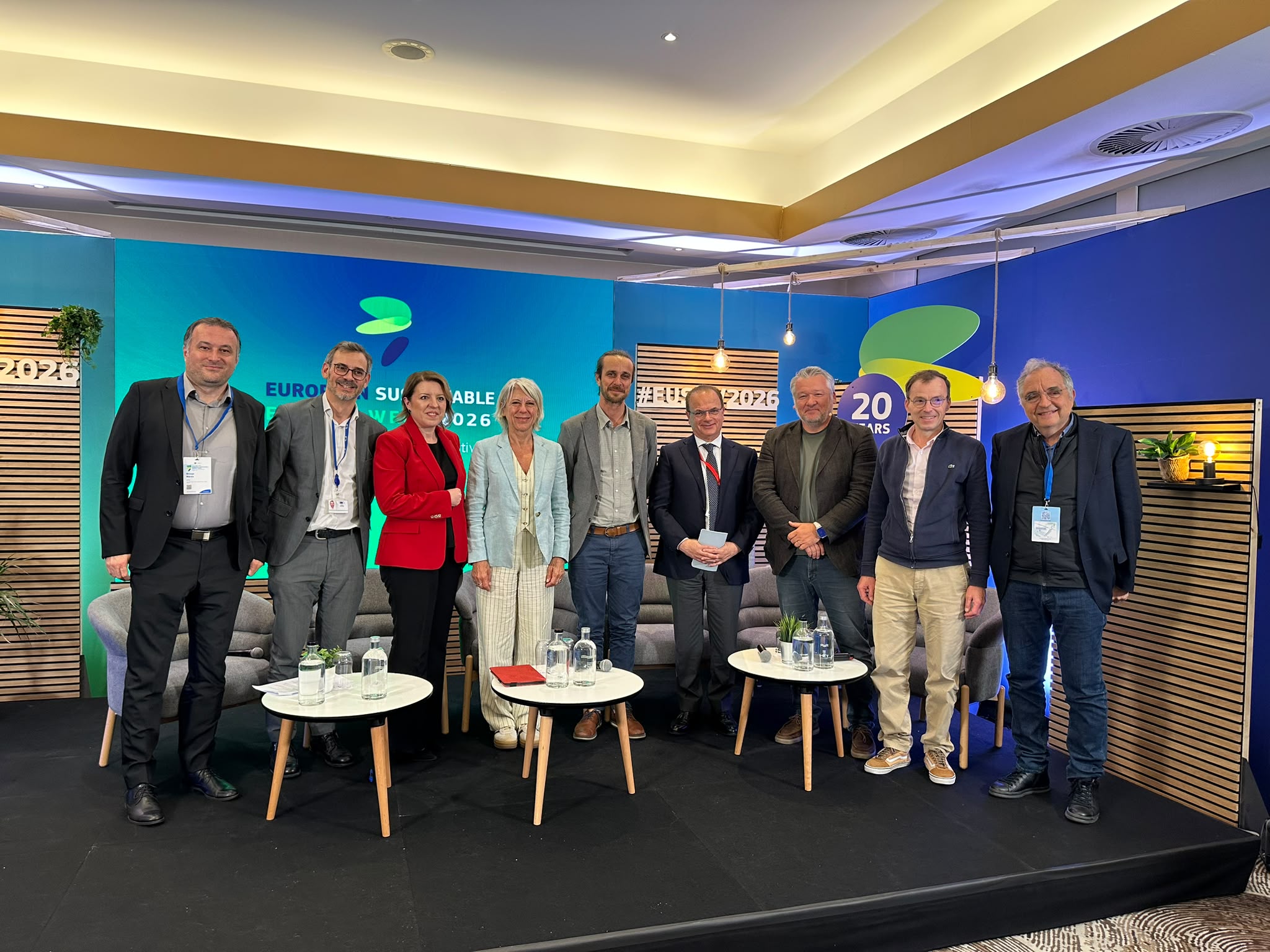 The session confirmed the core message of the joint policy recommendation: the local energy transition cannot rely on public budgets alone. Municipalities need better project development assistance, tailor-made financial instruments, fiscal incentives, risk-sharing mechanisms and stronger support structures for citizens and building owners. At the same time, public funding remains essential for projects that deliver strong social, environmental, and resilience benefits that are not captured by financial payback alone.
By linking the policy debate with concrete tools developed by LOGREENER, INFIRE and EnerCmed, the event showed how Interreg Euro-MED projects can contribute to practical implementation on the ground. Their joint message was clear: rebuilding Mediterranean cities requires more than technology and ambition. It requires integrated investment approaches, stronger governance capacity and citizens at the centre of the transition.