
Athens, 19-21 May 2026 – The Green Living Areas Mission brought together experts, project partners and policy stakeholders at the 3rd Institutional Policy Dialogue (IPD) to explore an emerging question for the Mediterranean region: can the successful experience of energy communities help inspire new forms of community-led water management?
Held within the framework of Circle the MED, 9th edition, as part of the MED Innovation Summit, the dialogue focused on the potential transfer of the OECOOP model from the energy sector to the water sector. Participants examined whether a similar umbrella structure could support the development of water communities and what governance, regulatory and operational conditions would be needed to make this possible.
The session followed a case-led, moderated format, pairing a concrete reference from the energy sector with a grounded assessment of water-sector realities.
Learning from the Energy Sector
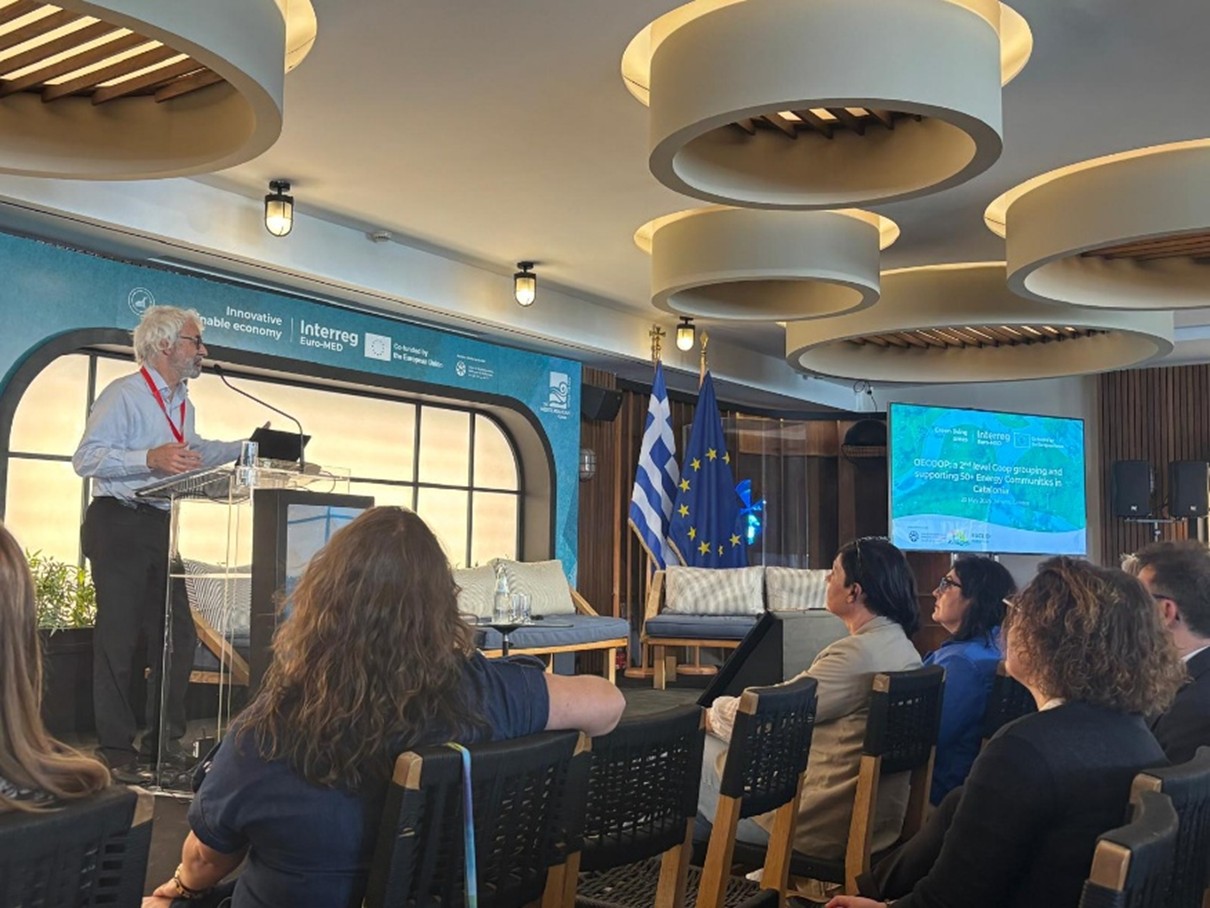 The discussion was built on work initiated during the 2nd Institutional Policy Dialogue in Brussels in 2025, where OECOOP presented its experience supporting local energy communities in Catalonia.
After an introduction from Mr Jordi Pascual (IREC), Mr Ermen Llobet, President of OECOOP, opened the session. He explained how the second-level cooperative was created to provide shared services—such as technical assistance, financial management, governance support and advocacy—to local energy communities. By pooling expertise and resources, OECOOP helps communities overcome common challenges while maintaining their autonomy.
Llobet argued that many of these support functions could potentially be adapted to the water sector, provided that viable projects and sustainable business models are first identified.
A Different reality for water communities
Providing a water-sector perspective, Elisa Ulazzi (SHARE.MedWATER) highlighted the significant differences between the two sectors. While energy communities benefit from a supportive European policy framework, water communities currently lack legal recognition across the Mediterranean.
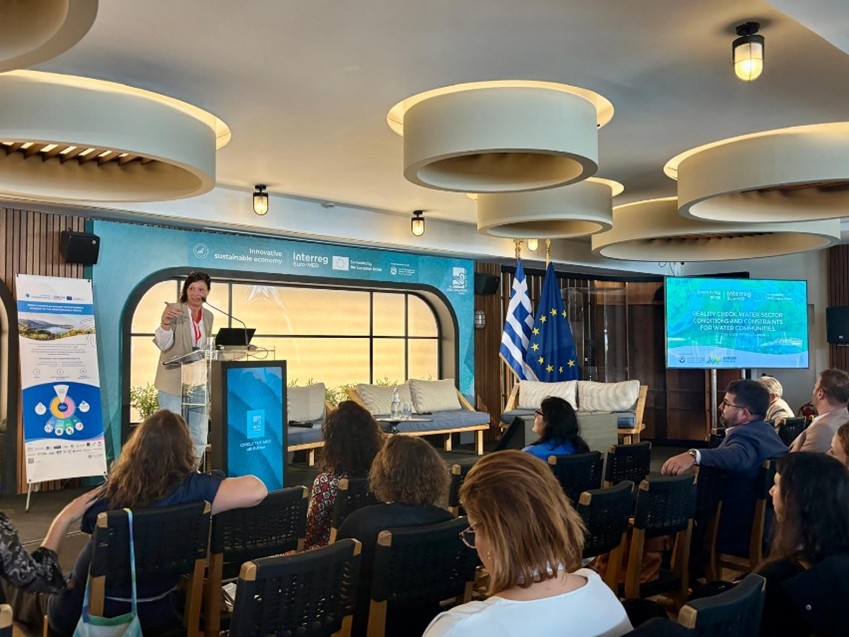 Research conducted within the SHARE.MedWATER project found that none of the seven countries analysed—Cyprus, Greece, Spain, Italy, France, Malta and Albania—currently recognises water communities as distinct legal entities.
Participants identified several barriers that make community-led water initiatives more challenging than energy projects, including:
- Limited access to dedicated funding;
- Greater liability linked to public health and water quality;
- Infrastructure requirements for storage and distribution;
- Difficulties achieving economic viability at a small scale;
- Complex relationships with existing water utilities.
At the same time, examples already exist in areas such as irrigation, water reuse and rural water management, suggesting that community-based approaches are not entirely new to the sector.
What Would It Take?
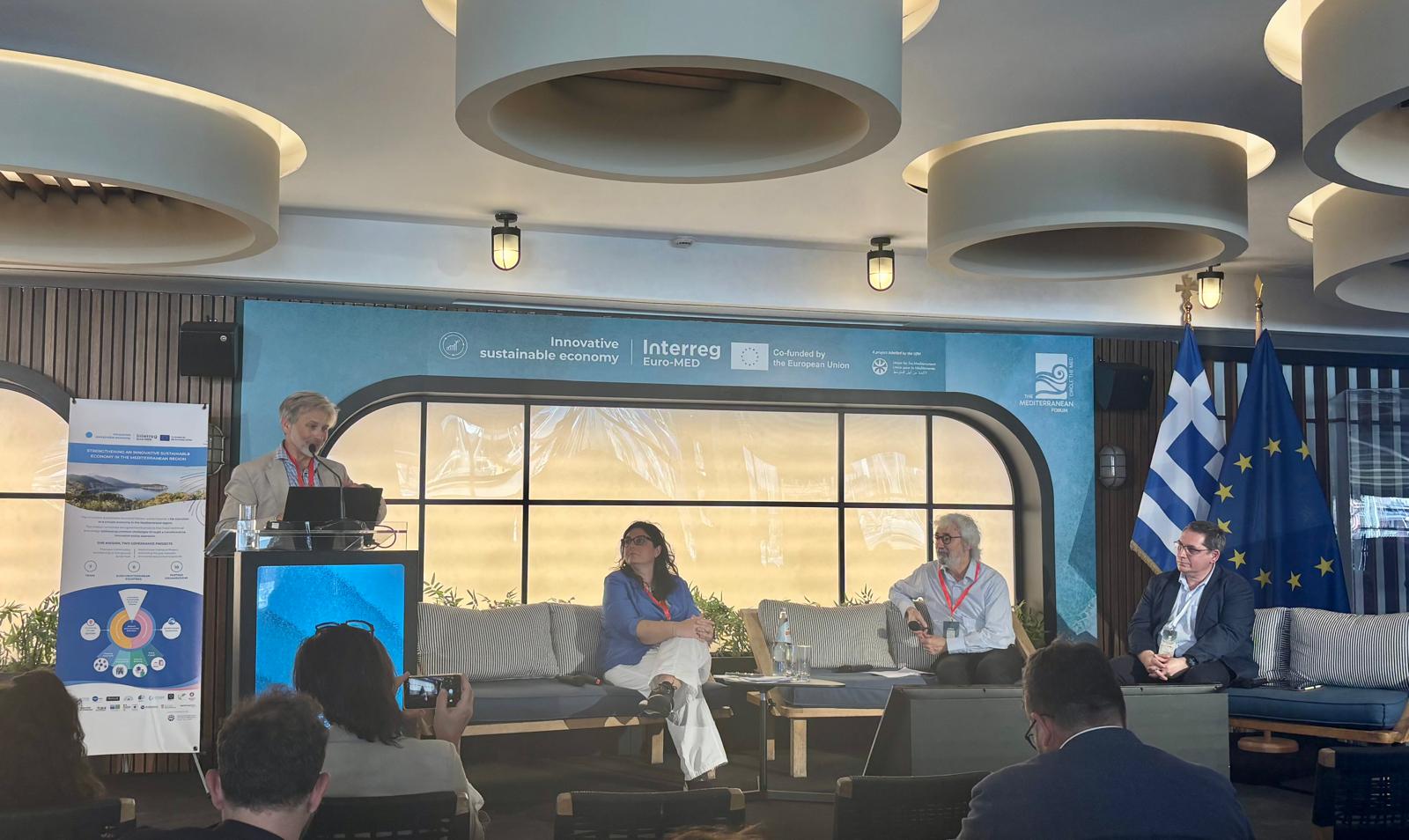 A panel discussion moderated by Eric Mino (SEMIDE) brought together Mr Ermen Llobet (OECOOP), Ms Tiziana Campisi (SHARE.MedWATER) and Mr Rodrigo-Ilarí (WATERVILL) to discuss the conditions needed for water communities to emerge and thrive.
The debate highlighted that water governance is often more socially and institutionally complex than energy governance. Participants stressed the importance of public acceptance, particularly around the reuse of unconventional water resources, and noted that solutions must be tailored to local contexts.
Several enabling conditions were identified:
- Formal recognition of water communities at the European level;
- Risk-based liability and permitting frameworks at the national level;
- Financial incentives for community-led water initiatives;
- Local support structures capable of providing technical, legal and financial assistance.
Participants also noted that the development of energy communities took several years and that a similar long-term approach will likely be needed for water communities.
The panel continued with a Q&A session that saw the participation of the audience, as well as some remarks from the IDRON and MED H2 projects.
Looking Ahead
Despite the challenges, the dialogue concluded on a positive note. Participants agreed that community-led approaches could play an important role in addressing water scarcity, supporting water reuse and strengthening local resilience across the Mediterranean.
Examples from Tunisia and Morocco, where local associations already participate in collective water management, were highlighted as valuable sources of inspiration. Emerging initiatives that combine energy and water objectives also demonstrate the potential for integrated community models.
The outcomes of the dialogue will contribute to future Green Living Areas Mission activities, including a forthcoming Policy Brief and continued exchanges among Mediterranean stakeholders.
While water communities remain at an early stage of development, the discussion in Athens showed that valuable lessons from the energy sector can help shape the governance models needed to support their future growth.